Try the hood before the pockets
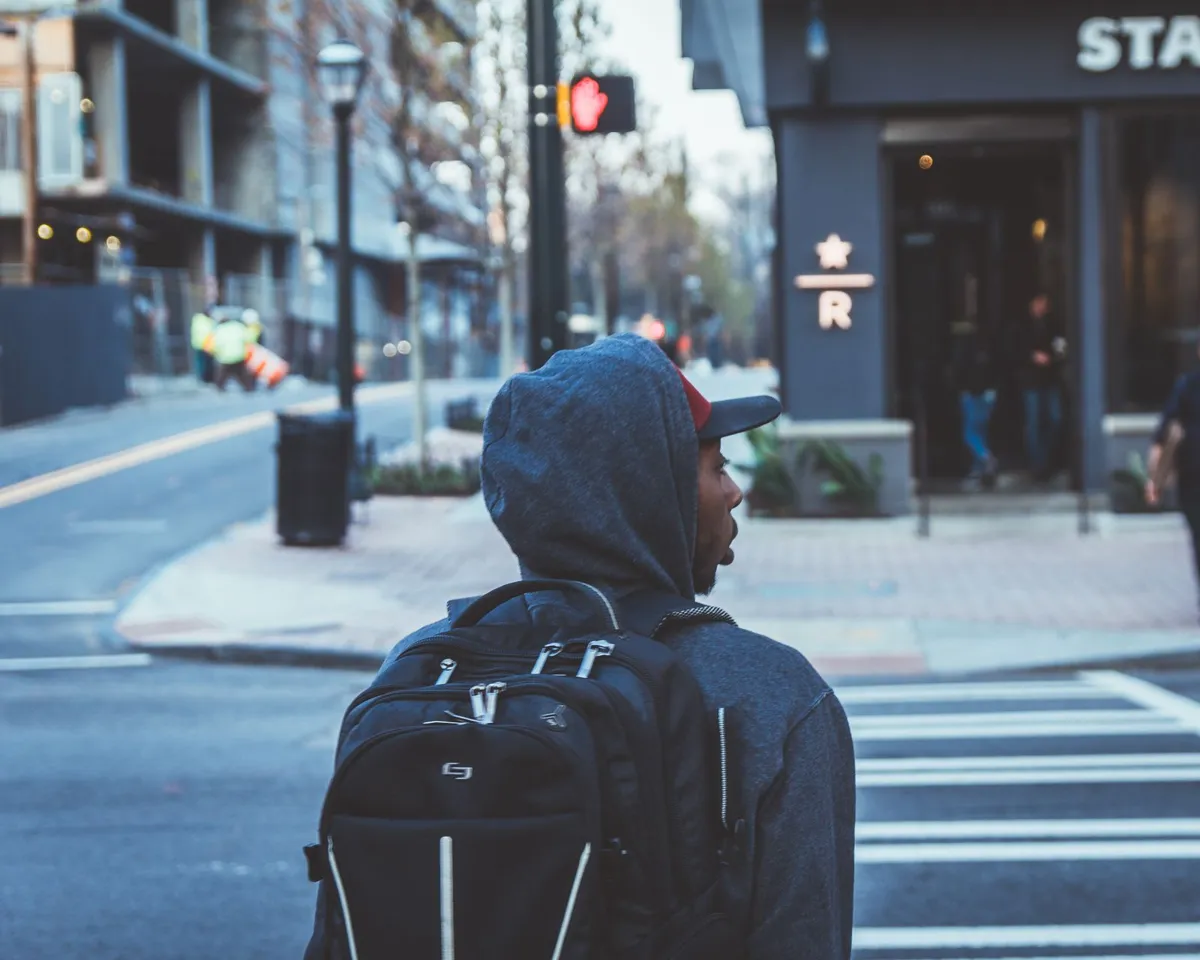
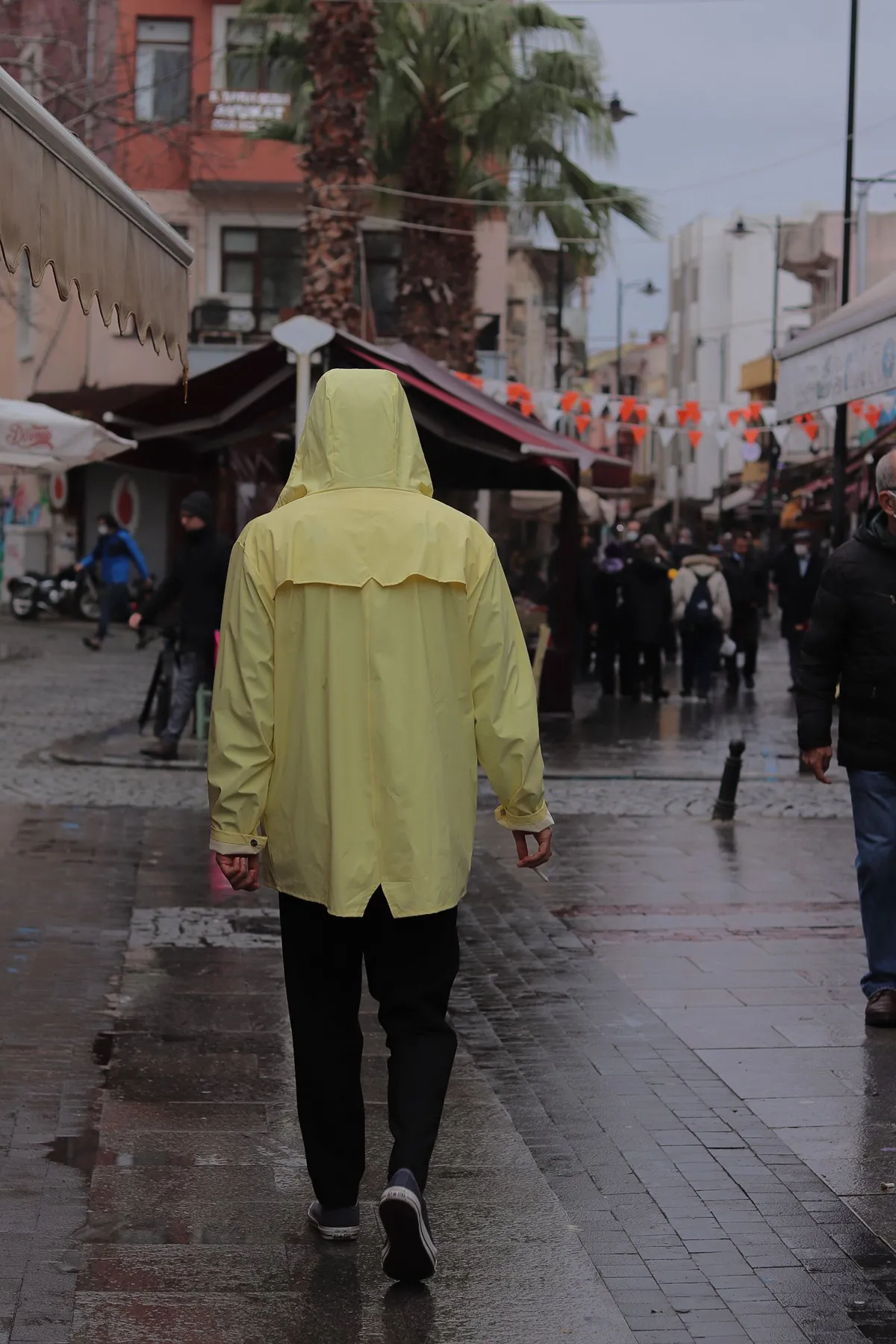
Put the jacket on and turn your head in both directions. The hood should let you see traffic and street signs without having to rotate your whole body. Test its adjustment with your hands as they would be on the trip. A hood that only stays in place when pulled tight across your eyes is not a useful compromise.
Reach forward as though holding a bag and raise your arms. Check sleeve length and whether the hem lifts uncomfortably. Try the jacket over your intended midlayer, not only a thin shop-fitting shirt. Extra room can help layering, but excessive fabric may become awkward on a crowded bus or in strong wind.
Match the protection to the day
Water-resistant and waterproof are not interchangeable descriptions. Read the maker's explanation of the fabric, seams and intended use instead of assuming a smooth finish means complete protection. A light shower layer may suit short walks between indoor stops; an itinerary with several exposed hours asks more of it.
Comfort also depends on managing heat. If you tend to walk quickly, consider whether the jacket can be opened or ventilated without becoming cumbersome. No label eliminates the need to slow down or remove a layer when you get warm. Think about a place to carry the jacket once the rain stops.
Build it into the rest of the outfit
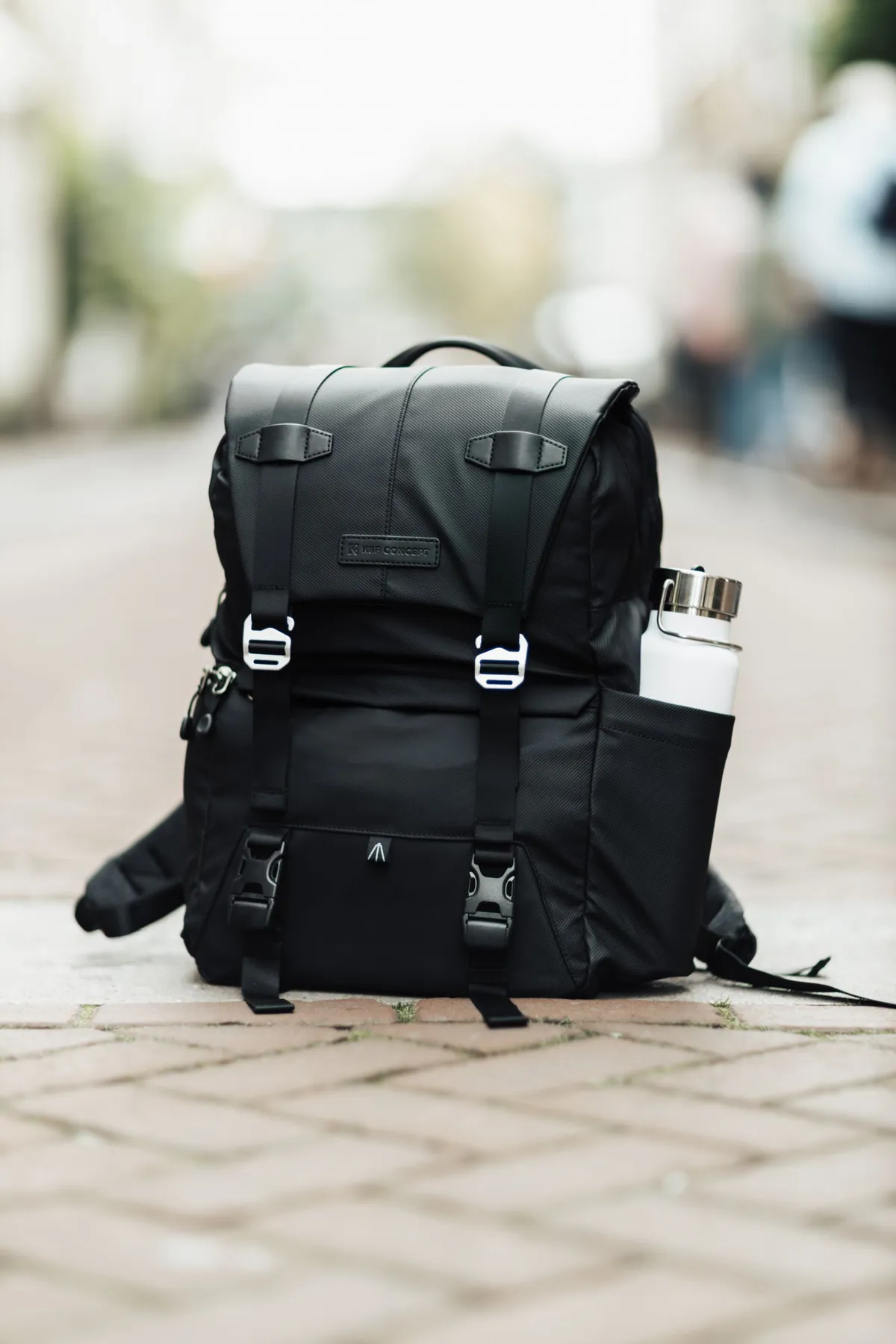
A very short jacket can leave the top of your trousers exposed when you sit or bend. A longer style may cover more but take up additional space in a small bag. Check the combination with your backpack straps and whether the pockets remain reachable. Your most useful pocket should not disappear under a waist strap.
An umbrella can complement a jacket on calm city streets, but becomes less convenient when you need both hands for luggage or a rail. Choose the combination you will genuinely carry. Follow the garment's care instructions before the trip; washing, drying and restoring a finish depend on its material. Do not discover a leaking seam for the first time halfway through a long walk.