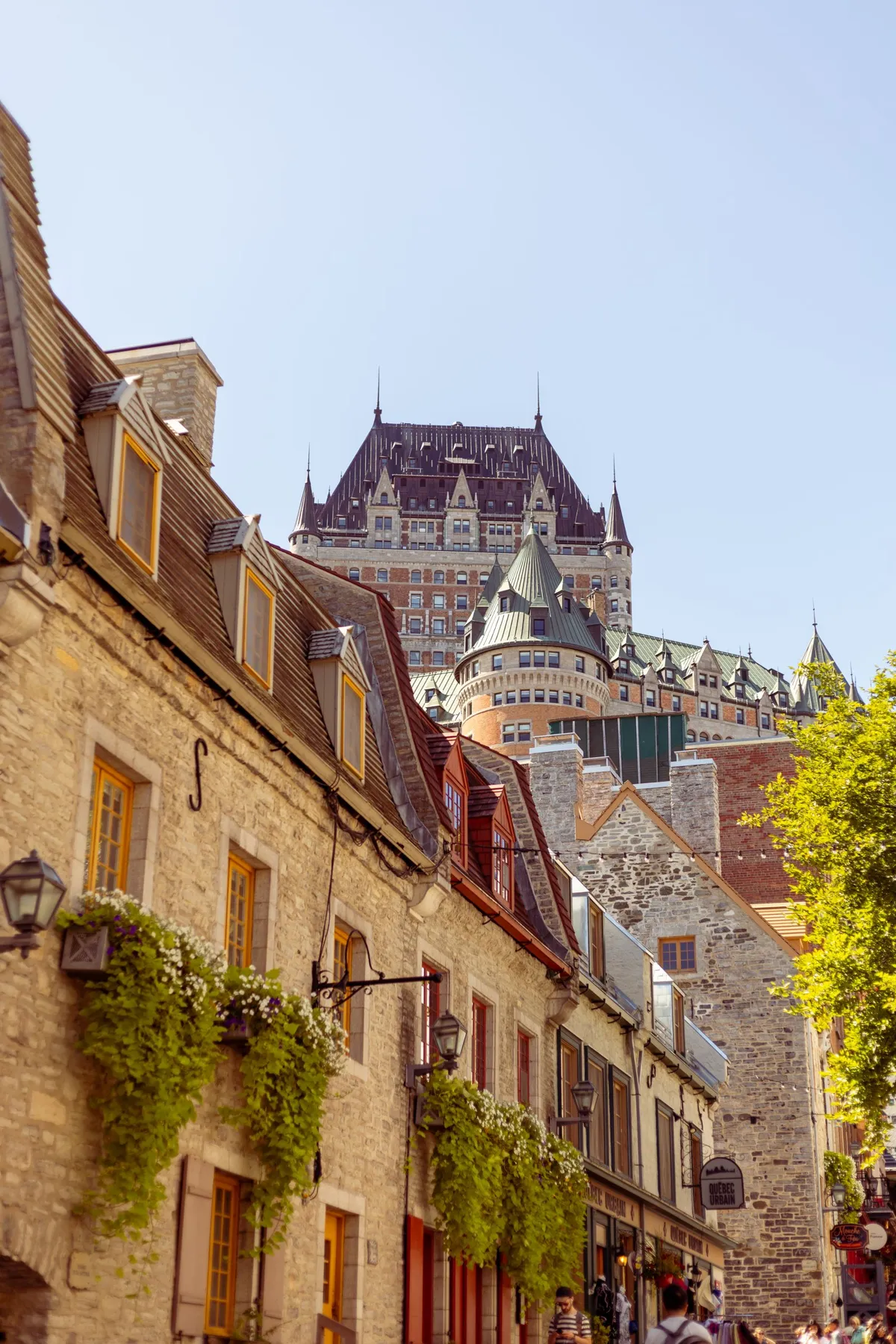
Upper Town as the first day's base
Begin around Dufferin Terrace and use the river view to orient yourself. Keep the first walk within the Upper Town streets, with breaks before the itinerary becomes tiring. The terrace is an outdoor space, so wind and seasonal conditions may shorten the time you want to spend there.
Choose one historic interior or museum if it interests you and check its current visitor arrangements. The rest of the morning can be spent on the streets and nearby public spaces rather than adding several timed entries. Plan lunch in the same general area instead of descending only to climb back for an afternoon booking.
A deliberate descent on day two
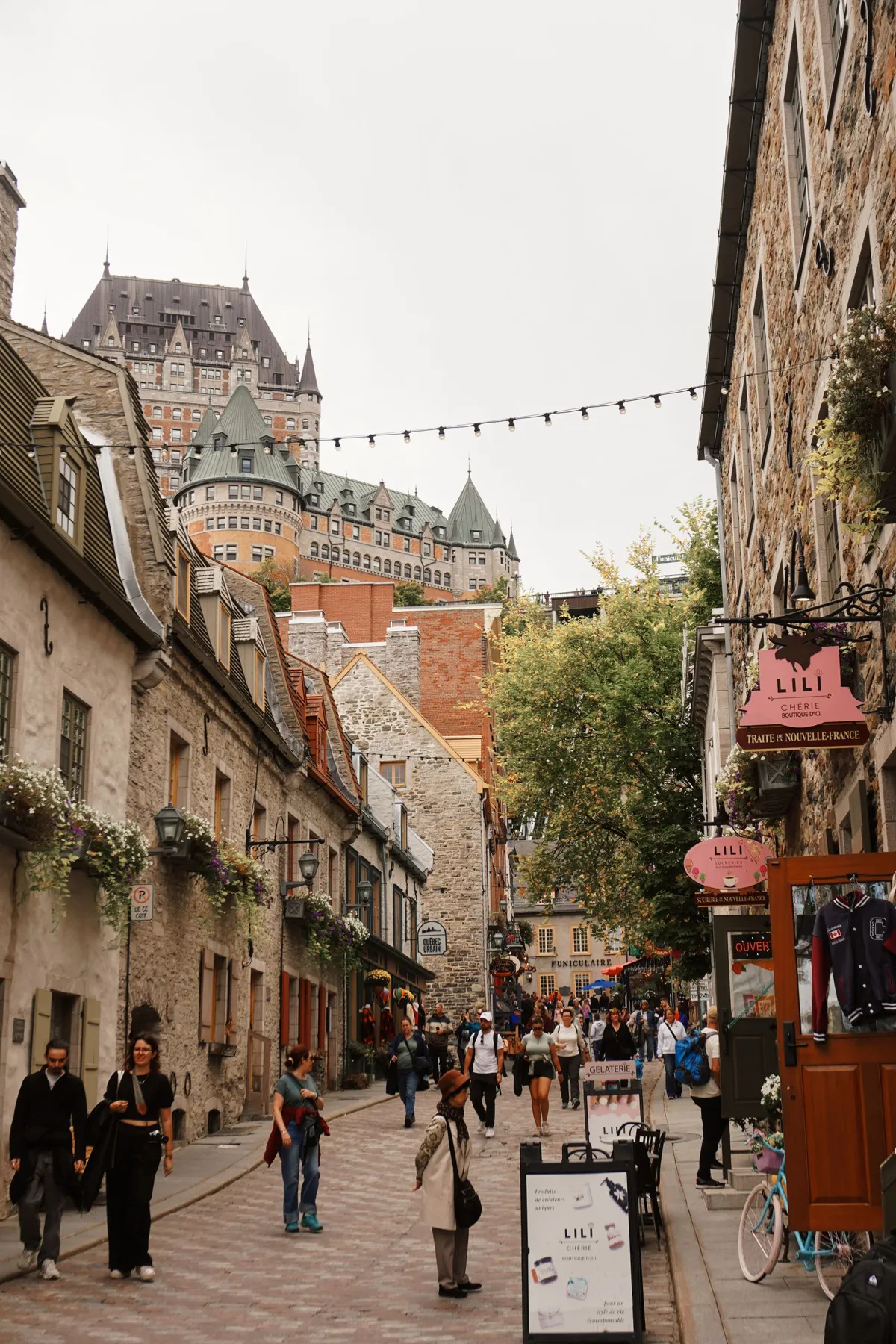
Make Lower Town the focus of the next morning, including the streets around Petit-Champlain and Place-Royale. Before setting out, choose how to travel between the levels. The funicular connects the area by Dufferin Terrace with Petit-Champlain, but its current operation and access arrangements should be checked directly.
If using stairs or a sloping route, consider the surface, weather and your own comfort. A short distance does not make a steep descent easy, particularly with luggage. Keep the main bag stored appropriately and carry only what you need for the neighborhood walk.
Allow time to look around without blocking the narrowest streets or private entrances. A small area can still hold a full morning when you stop for a visit, meal or conversation. Continue toward the nearby waterfront only if conditions and the time remaining make it sensible.
Make the return connection part of the route
Decide when and how you will return to Upper Town or your accommodation. Do not leave that decision until you are tired at the lowest point of the walk. If the intended connection is unavailable, use an appropriate alternative rather than assuming an unverified shortcut will be easier.
For poor weather, shorten the exposed sections and select a confirmed indoor visit in the same level of the city. This weekend omits farther excursions and a comprehensive circuit of every historic site. That is what makes the pace gentler: fewer level changes, fewer fixed appointments and enough room to adapt to the actual conditions rather than the deceptively small size of the map.