Test the complete load
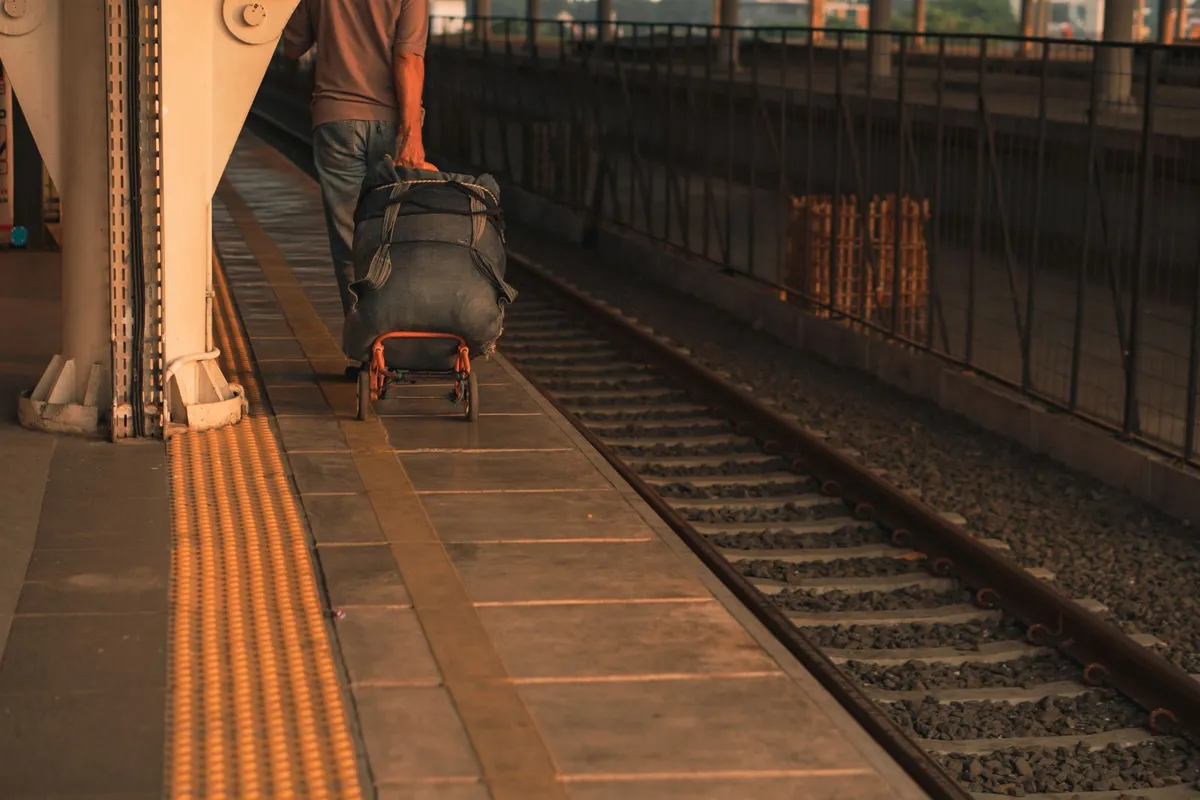
Before leaving home, move all your bags at once through a doorway and lift the main case onto a low shelf. Add the coat, water bottle and small purchases you expect to carry. If the test needs several trips, a busy platform will expose the same problem.
Read the luggage policy for the actual operator and route. Eurostar, for example, asks passengers to transport their bags safely and store them in designated spaces, with allowances varying by service and ticket category. Another railway may have different size, quantity or reservation requirements. Oversized equipment deserves its own check.
Pack a small onboard layer
Keep tickets, medication you need during the journey, valuables and a snack in a small bag that can remain with you. Do not bury everything in a case that will sit behind several others. Keep that smaller bag compact enough to fit the space provided without occupying someone else's seat.
Label your luggage as the operator requires, while avoiding unnecessary public display of sensitive details. Make the case recognizable with a simple tag or strap. You want to identify it quickly when several similar bags are stacked in the same rack, without unpacking belongings in the aisle.
Board, stow, then settle
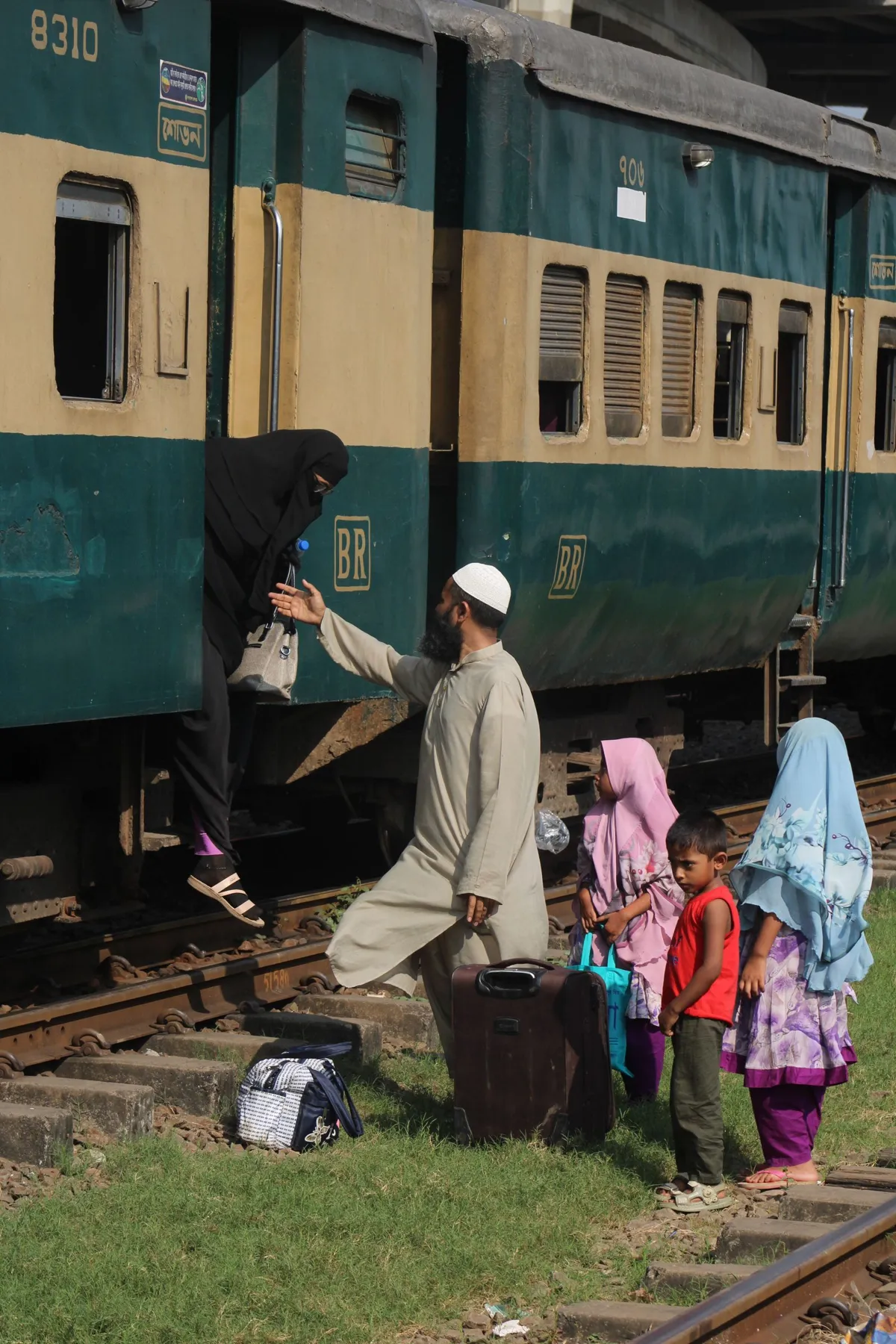
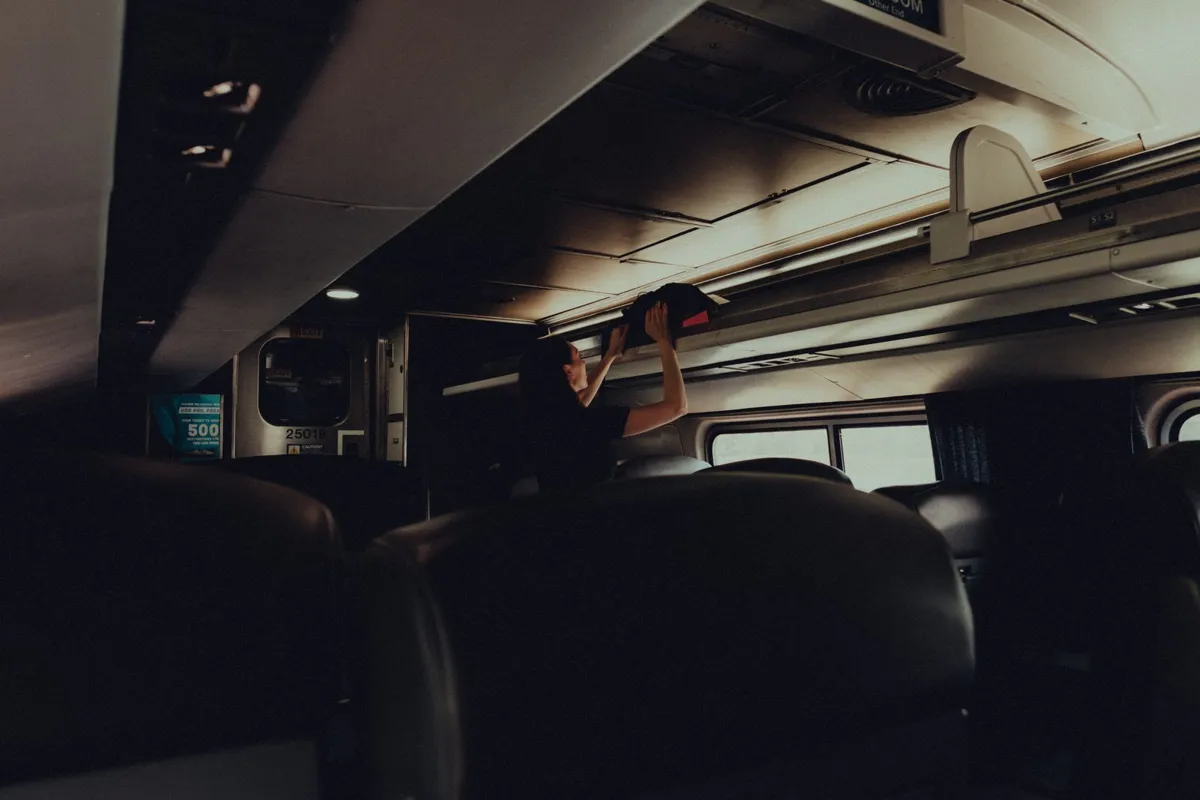
Let arriving passengers leave before moving aboard. Follow staff instructions about the correct carriage and luggage areas. Place heavy cases in suitable lower racks when available, and use overhead storage only for items you can lift and secure safely. Do not leave a rolling suitcase loose beside a door.
Aisles, wheelchair spaces and emergency exits are not spare luggage storage. If the normal racks are full, ask staff where to place the bag rather than improvising an obstruction. Keep straps gathered so they do not trail into the walkway, and do not attach luggage to the train unless the operator specifically permits it.
Prepare before your stop
Check the next-station announcement, close small bags and gather loose items before arrival. Retrieve the main case only when you can do so without blocking passengers or losing your balance. Do not wait beside the door for a long section of the journey simply to feel ready. A smaller, manageable load is usually the best way to reduce the pressure of a short station stop.